Blackjack Online in Canada: Rules, Strategy, Demo Tables and Live Dealer Play

Last updated: 2026 | Editorial review: iGaming content team | 19+ (18+ in Alberta, Manitoba and Quebec)

Blackjack, also called 21, is a casino card game where every player competes only against the dealer, never against the other seats at the table. The objective is single and precise: finish the hand with a total closer to 21 than the dealer's total, without exceeding 21. Going over 21 is a "bust" (sometimes called a "break"), and the wager is lost immediately.

That is the whole game in two sentences. Everything else is detail, and the detail is where money quietly leaks.

This guide covers card values, the full round sequence, dealer draw rules, payout mathematics (including why 6:5 tables are worse than 3:2), the basic strategy decision matrix, the Hi-Lo card counting method with the True Count formula, land-based hand-signal etiquette, the difference between RNG and live dealer tables online, and the behavioural risk profile of demo versus real-money play.
Provider

Evolution

RTP

99.28%

Min bet

€/$/£ 0.20

Max bet

€/$/£ 100.00
Blackjack Online in Canada Rules, Strategy

Why This Matters If You Play from Canada

Blackjack rules are global. Your account, your money and your protections are not.

If you deposit in CAD from a Canadian province, three things shape your actual experience more than any strategy chart. First, the regulator: Ontario players sit under iGaming Ontario and the AGCO, while other provinces run their own channels, such as PlayNow through BCLC, Espacejeux through Loto-Québec, PlayAlberta, and Atlantic Lottery in the east. Second, payments: Interac e-Transfer, Interac Online, prepaid cards and e-wallets like MuchBetter or Skrill move differently in speed, limits and fees. Third, the fine print: many bonuses count table games at only 5 to 10 percent toward wagering, which means blackjack play can look like progress while barely moving the requirement.

So the practical order of operations is not "learn to count cards". It is: confirm the licence, confirm the withdrawal route in CAD, read the bonus clause on table games, and only then sit down and worry about hitting a hard 16.

One more framing note. Nothing in this guide is a promise of profit. Correct play shrinks the house edge; it does not remove it.

Why This Matters If You Play

Understanding Blackjack: Nature and Objective of the Game

Blackjack is a fast, social casino classic with a compact core: build a hand closer to 21 than the dealer without busting, and beat the dealer rather than simply chasing 21. The mix of flexible Aces, quick binary decisions and a small, well-defined rule set makes it one of the easiest card games to learn and one of the most replayable.

Beginners often misread the goal. You are not trying to hit 21. You are trying to finish ahead of one specific opponent, and sometimes that means standing on a total you personally dislike.

Blackjack as a Structured Game of Chance and Skill

Blackjack sits between pure chance and pure skill. The card sequence is random, but each decision has a mathematically computable expected value, which is why the game has become a standard reference problem in decision science. Each hand yields clear feedback, and the rules constrain possible decision sequences, making it an attractive testbed for reinforcement learning.

«Blackjack is modelled as a stochastic environment with discrete states, actions and rewards, which makes it an ideal environment for reinforcement learning.» Variations on the Reinforcement Learning Performance of Blackjack, preprint (2023).

Practically, this matters to players for one reason. Because the game state space is finite, the optimal action for every player total against every dealer upcard has already been solved. Playing well is not about intuition. It is about reproducing a known decision table, hand after hand, including the hands that feel wrong.

History and Origin of the Name

Blackjack traces back to the French game vingt-et-un ("twenty-one"), documented in casino-game histories from the 17th and 18th centuries as a direct precursor of the modern game. The modern name came from an early bonus rule paid on specific two-card 21s.

The common explanation is that the name refers to a black Ace (spade or club) combined with a Jack. There is, however, a competing research hypothesis: French card historian Thierry Depaulis has argued that the name refers to zinc blende, a mineral associated with silver and gold deposits and colloquially known as "black-jack". In his reading, 21 was popular during the Klondike Gold Rush, and prospectors used "blackjack" to describe the bonus paid for making 21 from two cards. That remains a scholarly interpretation, not a settled fact, and it is worth flagging as such.

History and Origin of the Name

Rules of Blackjack: Cards, Bets, and Dealer Play

The pack is 52 cards, no jokers. In casinos, several decks are shuffled together and dealt from a box called the shoe. Two-deck, six-deck and eight-deck games are the most common; fewer decks generally favour the player, all else equal.

Card Values and the Blackjack Hand

  • 2 to 10:face (pip) value.
  • Jack, Queen, King:10 points each.
  • Ace:1 or 11, whichever value benefits the hand, chosen automatically in the player's favour.
Card Values and the Blackjack Hand

A hand containing an Ace counted as 11 is a soft hand (soft 17 = A+6). A hand with no flexible Ace, or an Ace forced to count as 1, is a hard hand (hard 17 = 10+7). This distinction changes both dealer obligations and correct player decisions, and it is the single most common blind spot among new players.

Natural blackjack is specifically an Ace plus any 10-value card on the first two cards, a two-card 21. Push means the player and dealer totals are equal: nobody wins, and the original stake is returned. If both the player and the dealer hold a natural, standard casino blackjack rules also score the hand as a push.

A hand containing an Ace counted

Sequence of Betting, Dealing, and Player Actions

  1. Place the bet. Every player places an initial wager before any cards are dealt; nothing is dealt until betting closes.
  2. Cards are dealt. Each player receives two cards (face up in shoe games); the dealer receives one card face up and one face down, the "hole" card.
  3. Evaluate the hand. Add the two card values, noting whether the total is hard or soft.
  4. Player decision. Hit, stand, double down, split or surrender, according to the table rules.
  5. Dealer turn. The dealer reveals the hole card and draws according to fixed house rules.
  6. Settlement. Final totals are compared, and bets are paid, collected or returned.

Pace differs sharply by format. Software-driven RNG blackjack is widely reported by industry analysts to run substantially faster than a live table, commonly cited at more than 60 hands per hour, but those figures come from operator-side analytics without published methodology and should be read as indicative rather than verified. What is verifiable is the mechanism, not the exact number: RNG tables remove shuffling, chip handling and other players' decisions, so hands per hour are structurally higher. Same house edge, more repetitions, larger expected loss over the same 40 minutes.

Sequence of Betting, Dealing, and Player

Player Actions: Hit, Stand, Double, Split, and Surrender

ActionWhat happensWhen it is available
HitTake another cardAny active hand that has not busted
StandKeep the current total, end the turnAny active hand
Double DownDouble the original wager, receive exactly one more card, then standAfter the initial two cards; the extra wager cannot exceed the original bet
SplitSplit a pair into two hands, placing a second bet equal to the firstOnly when the first two cards have the same value; split Aces are usually limited to one card each
SurrenderForfeit half the wager and end the handOnly at tables offering surrender, and only right after the initial deal, and not available in most Double Deck games

Splitting is not a matter of taste. Each pair has a computable marginal value, which shows plainly which splits earn money and which quietly donate it.

«A 2019 mathematical study calculated exact expected values for splitting pairs in single-deck blackjack, identifying optimal and unprofitable splits.» Exact Calculation of Expected Values for Splitting Pairs in Blackjack (2019).

Dealer Rules: Hit on Soft 17, Stand on Hard 17

The dealer has no choices at all. After players finish, the dealer reveals the hole card and must draw until reaching a required total:

  • The dealer must hit on 16 or lower.
  • The dealer stands on hard 17 or higher.
  • On soft 17 (A+6), the rule varies by table: some games require a hit, some require a stand. Hit on soft 17 (H17) is worse for the player than stand on soft 17 (S17), adding roughly 0.2 percent to the house edge. Check the felt, or the rules tab online, before you sit.
  • If the dealer busts, every remaining player hand wins.

Payouts and the Mathematics of 3:2 versus 6:5

  • Win:paid 1:1.
  • Natural blackjack:paid 3:2, or 6:5 at some tables.
  • Push:stake returned.
  • Lose or bust:the dealer collects the wager.
Payouts and the Mathematics of 3

Always choose 3:2. The difference is not cosmetic:

Table$10 blackjack paysApproximate house edge (basic strategy)
3:2$15about 0.5%
6:5$12about 1.9%

One rule change nearly quadruples the long-run cost of playing. Over 100 hands at $10, that is the gap between an expected loss of a few dollars and an expected loss of roughly $19. Same game, same chart, different price tag.

Insurance: The Rule and Why It Is a Poor Bet

Insurance is an optional side bet offered only when the dealer's face-up card is an Ace. You may wager up to one-half of your original bet. It pays 2:1 if the dealer's hole card is a 10-value card (a dealer blackjack) and loses in all other cases. The insurance result is settled separately from your main hand.

Mathematically, insurance favours the house hard: the built-in advantage on the wager typically runs between roughly 5.8 and 7.7 percent, depending on the number of decks. Unless you are counting cards and know the shoe is unusually rich in ten-value cards, decline insurance every time. That includes "even money" on your own blackjack, which is the same bet wearing a friendlier name.

Insurance The Rule and Why It

Table Layout and Land-Based Casino Etiquette

A blackjack layout is a placement guide, not a rulebook. Each seat has its own betting box for the main wager. The player's cards sit face up nearest the player, the dealer's cards sit at the dealer position, and any side bets, such as Insurance, Perfect Pairs and 21+3, are printed as separate circles or boxes when the variant supports them. Printed action labels usually read Hit / Stand / Double / Split, with Surrender added on tables that offer it.

Hand Signals: How to Act Without Speaking

At a land-based table you never touch the cards in a shoe game, and decisions are communicated with gestures so the overhead cameras can verify every action:

  1. Hit: tap or scratch the felt with your finger behind your wager.
  2. Stand: wave your hand flat, palm down, side to side above your cards (the classic "waving off").
  3. Double Down: place an additional stack of chips beside your original bet, not on top of it, and show one finger.
  4. Split: place an equal second bet beside the original and show two fingers.
  5. Surrender: where offered, draw an imaginary horizontal line behind your bet and say "surrender" for confirmation.

Small courtesies matter too. Place cash on the felt rather than handing it to the dealer, keep your chip stack out of the betting circle once the deal begins, and never lift cards off the table. Nobody is being fussy for the sake of it. The camera has to see everything.

Hand Signals How to Act Without

Blackjack Strategy: Basic Decisions at the Table

There is no guaranteed winning system, and any site telling you otherwise is selling something. Blackjack blends chance and skill, and the best a player can do is minimise the house edge with disciplined, chart-based decisions.

The Basic Strategy Decision Matrix

Basic blackjack strategy answers one question: given your total and the dealer's upcard, what is the highest-expected-value action?

Your handDealer shows 2 to 6Dealer shows 7 to Ace
8 or lessHitHit
9Double if allowed, otherwise hitHit
10 to 11Double downHit (double on 10 to 11 vs 7 to 9)
Hard 12 to 16StandHit
Hard 17+StandStand
Soft 13 to 17 (A2 to A6)Double if allowed, otherwise hitHit
Soft 18 (A7)Double vs 3 to 6, otherwise standStand vs 7 to 8, hit vs 9 to A
Soft 19+StandStand
A-A and 8-8Always splitAlways split
10-10 and 5-5Never splitNever split
4-4Do not splitDo not split

The practical rules that fall out of the table:

  • Stand on 12 to 16 when the dealer shows 2 through 6. The dealer is far more likely to bust than you are to improve.
  • Hit hard 12 to 16 when the dealer shows 7 through Ace. You have to improve, uncomfortable as that is.
  • Always split Aces and 8s. Aces create two strong starting hands; 8-8 rescues you from a weak 16.
  • Never split 10s. Twenty already wins most of the time.
  • Double down on 10 or 11. These offer the best single-card improvement odds in the game.
  • Always hit 8 or less. There is no bust risk, so there is no decision.
  • Skip insurance. Over any real sample, it loses more than it returns.

Two extra rules worth learning once you are comfortable: take double after split (DAS) when the table allows it, and surrender hard 16 against a dealer 10 where surrender exists. Small edges, but they are free.

The practical rules that fall out

Card Counting: The Hi-Lo Method in Four Steps

Card counting shifts the edge by tracking how rich the remaining shoe is in high cards. It is legal but discouraged by casinos, and it is largely irrelevant in RNG games, where the virtual deck is effectively reshuffled every hand.

Step 1. Assign a value to every card:

  • 2, 3, 4, 5, 6 → +1
  • 7, 8, 9 → 0
  • 10, J, Q, K, A → −1

Step 2. Keep the Running Count. Start at zero and add or subtract as cards appear. A positive count favours the player; a negative count favours the dealer.

Step 3. Convert to True Count. In multi-deck games the running count must be normalised:

True Count = Running Count ÷ Decks remaining in the shoe

Example: a Running Count of +6 with 3 decks left gives a True Count of 6 ÷ 3 = +2.

Step 4. Adjust bet sizing. Raise the bet in proportion to the True Count, typically only once the True Count reaches +2 or higher, and drop back to the table minimum when the count falls. Honest caveat: counting demands a large bankroll, sustained accuracy and tolerance for being asked to leave. For most recreational players it is a hobby, not an income.

Card Counting The Hi-Lo Method in

What Machine Learning Says About Human Expectations

Because blackjack is fully specified and instantly scored, it has become a benchmark for training and evaluating automated agents. Recent experiments used a large language model to design the training curriculum for a deep reinforcement learning agent instead of hand-tuning it, reporting a workflow acceleration of over 74 percent.

«A DQN agent with an LLM-guided curriculum improved its win rate from 43.97% to 47.41% and reduced its bust rate from 32.9% to 28.0%.» Learning to Play Blackjack: A Curriculum, preprint (2026).

The takeaway for human players is blunt but useful. Even a well-trained optimiser converges to a win rate below 50 percent per hand. No decision system turns blackjack into a positive-expectation game on its own. Correct play only shrinks the deficit, and that is still worth doing.

Types of Blackjack Online: Classic, RNG and Live Dealer

Online blackjack splits into three overlapping formats: blackjack classic played against programmed table logic, RNG blackjack where card selection is driven by a random number generator, and blackjack live dealer streamed from a studio with a real dealer and physical cards. Industry usage of "classic blackjack" is inconsistent. Sometimes it means one specific RNG variant, sometimes any non-live table. The functional distinction is simply whether a live dealer and a video feed are involved.

Blackjack Classic and RNG Games

In RNG blackjack the outcome of every hand is determined by an algorithm rather than a physical deck, with the virtual shoe effectively reshuffled continuously. That removes shuffling and dealing pauses, so the tempo runs much faster than live play. Most vendors also expose the same table as a blackjack demo or play-for-fun mode, with no wagering and no withdrawals.

Fairness rests on third-party testing rather than on player trust. In regulated iGaming markets, RNGs and remote gaming servers are examined by independent laboratories accredited to ISO/IEC 17025 and tested against standards such as GLI-11 and GLI-19. Requirements vary by jurisdiction: some regulators require only accredited RNG testing, while others separately audit the game server and the reporting layer. If a site cannot show you who tested what, treat that as missing data rather than as reassurance.

Blackjack Classic and RNG Games. In

Blackjack Live Dealer and Live Casino

Blackjack live casino tables are produced in licensed studios by suppliers such as Evolution, Pragmatic Play Live, Playtech, Stakelogic Live and OnAir Entertainment, using real dealers, physical cards and multiple camera feeds. Dealer requirements are operational rather than glamorous: accurate card handling, strict rule compliance, camera-facing presentation, and real-time moderation of the chat while the round stays on schedule.

Typical parameters of a flagship live table (Evolution's Blackjack Live, released 2015) illustrate the format:

  • RTP: 99.28 percentfor classic live blackjack played with correct strategy. Note this is a card game RTP, not a slot RTP, and the published figure can differ between jurisdictions.
  • Seats:seven, plus unlimited Bet Behind positions.
  • Bet range:roughly $5 minimum to $2,000 maximum per table.
  • Availability:streamed 24/7 across desktop, iOS and Android.
N1bet heading-banner

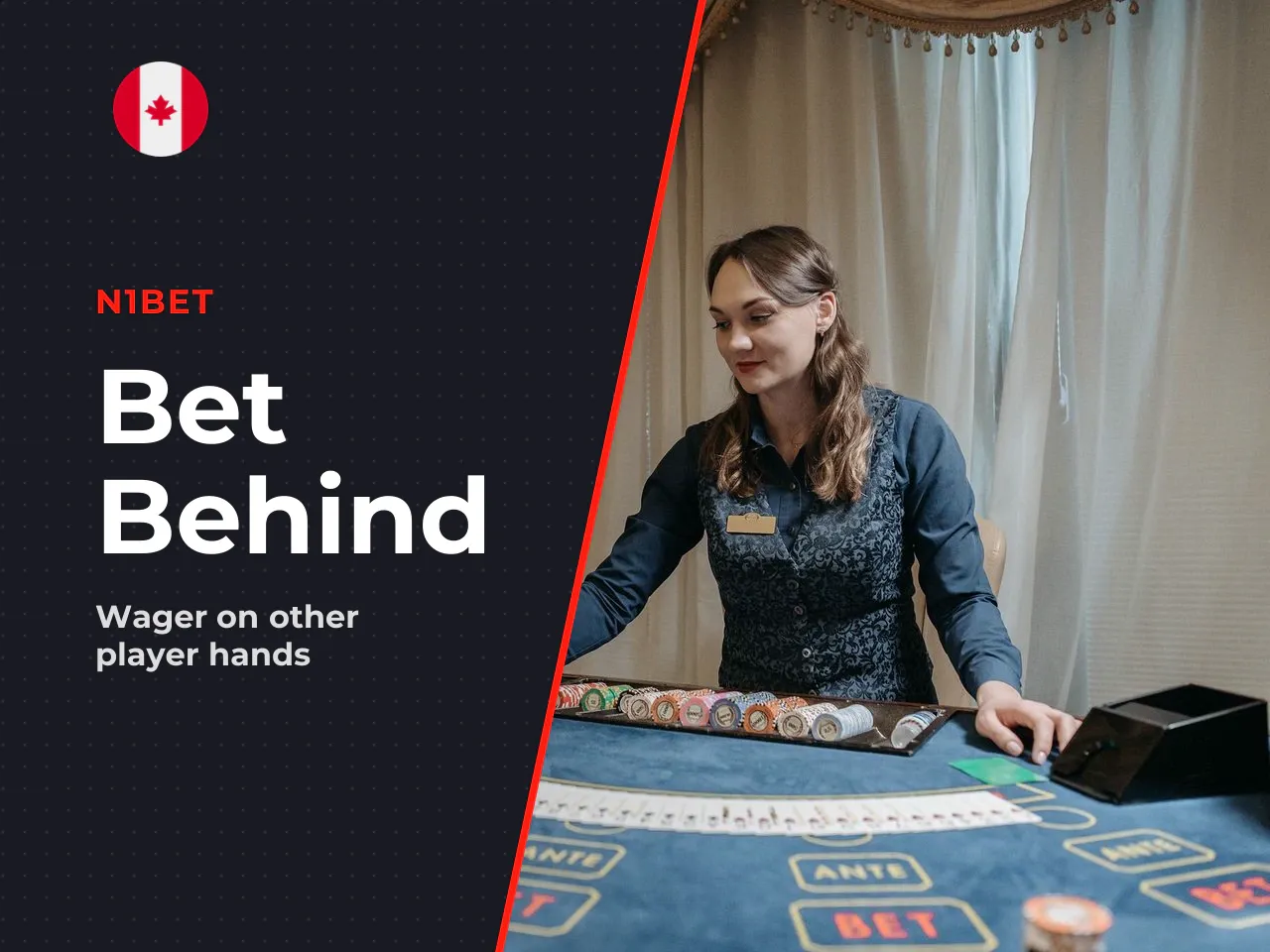
Bet Behind deserves a specific warning. When all seats are taken, you can wager on another seated player's hand, but that player makes every decision, hit, stand, double or split, while your money is at risk. You inherit their mistakes with no way to override them. Some players enjoy that. Most regret it around the third time somebody stands on 12 against a 4.

Table limits also work differently between formats. Live tables publish separate minimum and maximum limits per physical table, tied to the studio room (Silver, Gold, Diamond, Platinum and Salon Privé tiers are common), whereas RNG limits are wager caps configured by the operator in software.

Bet Behind deserves a specific warning

RNG versus Live Dealer: Side-by-Side Comparison

ParameterRNG / Blackjack ClassicBlackjack Live Dealer
Card sourceCertified random number generatorPhysical cards, real shoe
ShuffleContinuous, every handPhysical shoe, periodic shuffle
SpeedFastest, no dealer or co-player delaysSlower, paced by the dealer and betting timers
Demo modeUsually availableAlmost never available
Card countingIneffectiveTheoretically possible, practically limited
Table limitsSoftware-configured capsPer-table studio limits, higher ceilings
InteractionNoneLive chat with the dealer
Extra featuresSide bets, adjustable speedBet Behind, multipliers, side bets, VIP rooms
VerificationISO/IEC 17025 labs, GLI-11 and GLI-19Studio licence, operator licence, audit

Canadian lobbies show how lopsided the shelf space has become. Published table counts at licensed brands range from around 21 tables (4 RNG, 17 live) at one operator to 621 tables (3 RNG, 618 live) at another, with 235 tables (13 RNG, 222 live) at a third. Live formats now dominate, which also means demo practice options are thinner than they look.

Engagement, Session Length and What the Numbers Actually Show

Operator-side analytics frequently report that RNG blackjack sessions last roughly 12 to 20 minutes, while live dealer sessions run 45 to 90 minutes. Those ranges come from commercial engagement reports without published samples or methodology, so treat them as directional industry estimates, not established figures. The structural trade-off is the reliable part: RNG delivers more hands per minute, live delivers longer time at the table, and both raise total money staked through different levers.

Fact-Checking Casino Offerings and Rule Variations

Marketing labels are not rule disclosures. "VIP" branding on a table may suggest exclusivity or better odds, but no publicly documented audit supports the claim that VIP-labelled tables offer materially better player odds. Where operators cite such comparisons, the underlying data is not published and cannot be independently verified. Judge a table by its printed rules, not its badge.

The rules that actually move the edge:

  • Blackjack payout, 3:2 versus 6:5;
  • Dealer soft 17 rule, S17 versus H17;
  • Number of decks, fewer is better;
  • Double after split (DAS) permitted or not;
  • Surrender availability, usually absent in Double Deck games;
  • Re-split limits, and whether split Aces may be hit.

Six lines in a rules tab. Two minutes of reading. It is the cheapest edge available to a recreational player.

Fact-Checking Casino Offerings and Rule Variations

Blackjack Demo, Free Blackjack or Real Money

Free blackjack is a genuinely useful learning tool and a documented risk pathway. Both statements are true at once, and both belong in an honest guide.

Design and House Edge of Demo Blackjack Games

Reputable demo tables replicate the paytable, deck count and dealer rules of the cash version, which in turn mirror the live version.

«A Bet365 demo table reproduces real-game odds: 48.7% player wins, 46.3% dealer wins and 5% pushes when the dealer shows a seven.» Commentary on online casino demo modes (2026).

Read the implication carefully: in a faithful demo you still lose more hands than you win. Demo mode does not lower the house edge. It only removes the cash consequence, which is exactly why it is worth using and exactly why it can mislead.

A frequently repeated claim states that the average Australian player using demo casino products spent 12 hours a week switching between demo reels and real-money tables. That figure originates from an industry blog without a disclosed sample or methodology, so treat it as an unverified market estimate rather than a research finding. The verifiable point is narrower and still important: demo and cash products sit side by side in the same lobby, so switching between them takes one click and no second thought.

Read the implication carefully in a
ParameterBlackjack Demo / Free BlackjackBlackjack Real Money
PurposeLearning blackjack rules, testing strategyWagering for cash outcomes
Deposit requiredNoYes
Financial riskZero in monetary termsThe full amount staked
WinningsVirtual credits onlyWithdrawable, subject to KYC and terms
Strategy testingFull and unlimitedPossible but costly
Psychological profileSkill acquisition, error correctionReward-seeking, loss aversion, chasing

Responsible gambling note. Blackjack real money play carries a real risk of losing money. Set deposit and bet limits before your first hand, keep the session inside a budget you can afford to lose, and never treat the game as a way to win reliably. 19+ (18+ in Alberta, Manitoba and Quebec).

Psychological and Behavioural Impacts of Free-Play Modes

Research on gambling behaviour consistently finds that real stakes intensify motivation and emotional arousal relative to free or hypothetical play, because outcomes carry immediate financial consequences. Free play mainly supports skill acquisition. Cash play activates reward-seeking and loss aversion.

The gateway effect is documented rather than hypothetical, with free-play options acting as a "foot in the door" into gambling for money.

«43% of males under 18 had played free games on casino sites, versus 33% of 18–24-year-olds, and most began specifically with demo mode.» Griffiths et al., youth online gambling study (2010).

Later work extends the finding beyond casino demos, placing simulated gambling environments inside a broader risk ecology for gambling-related harm.

«Lifetime participation in simulated gambling forms, including free social casino games, was associated with monetary gambling and related problems.» Study on simulated gambling (2022).

The scale of exposure is the part that tends to surprise readers.

«According to a 2026 policy brief, 17.9% of adolescents worldwide gambled in the past year; in North America the figure was 33.7%.» Policy brief on youth gambling in the digital age (2026).

Transition Rates from Demo to Real-Money Play

Conversion from free play to deposits happens quickly, apparently driven by the wish to reproduce the same feel of play with real stakes attached.

«A University of Sydney study found that 27% of players who used demo mode for under 30 minutes made a deposit within 48 hours.» Commentary on online casino demo modes, citing University of Sydney (2026).

Practical implication, and this is the part I would tell a friend: use blackjack demo with a defined objective. Rehearse the basic strategy matrix until you can reproduce it without looking at the chart. Then treat boredom with free play as a signal to stop for the day, not as a signal to fund an account.

Risk Profile, Regulation, and Expected Value in Real-Money Blackjack

This information is general in nature and does not replace advice from a qualified professional. Gambling involves the risk of financial loss and addiction. If you are struggling to control your gambling, contact a support helpline in your province.

Even under perfect basic strategy on the best available rules, blackjack real money play carries a negative expected value of roughly 0.5 percent of total amount wagered per hand. Two structural factors magnify that number:

  • Rule degradation. A 6:5 payout alone pushes the edge to about 1.9 percent.
  • Hand volume. The edge applies per hand, so faster formats compound the same percentage more times per hour.

Regulatory protection is procedural, not mathematical. Licensing and audits confirm that the game is fair and the RNG is random. They do not confirm that a player can win over time, and no regulator has ever claimed otherwise.

Risk Profile, Regulation, and Expected Value

Blackjack Within the Broader iGaming Picture

Revenue Growth and What It Means for Table Availability

Regulatory reporting shows how quickly digital gambling products are growing relative to traditional casino floors, the same trend that has expanded online casinos and iGaming catalogues from a handful of blackjack tables to several hundred. In Pennsylvania, iGaming revenue, which includes online slots, table games and online blackjack, reached $2,181,669,449 in 2024, a 25.25 percent increase over the 2023 figure of $1,741,832,079.

«Pennsylvania's total gaming revenue exceeded $6.13 billion in 2024, with iGaming revenue rising 25.25% to $2.18 billion.» Pennsylvania Gaming Control Board, Annual Revenue Report (2024).

For players, growth brings choice and fragmentation together: more variants, more side bets, more rule permutations, and therefore more tables where the house edge sits quietly above the headline 0.5 percent.

How to Choose a Blackjack Casino for Online Play

Verification comes before entertainment. A workable checklist runs six items deep, and it takes less time than a coffee:

  1. Licence. The licence number, issuing authority and jurisdiction must be verifiable both on the operator's legal pages and in the regulator's public register, for example iGaming Ontario and the AGCO, Alberta Gaming, Liquor and Cannabis, the UKGC or the MGA. Where operator claims and the regulator's record disagree, the record wins.
  2. Independent audit. Look for testing by accredited laboratories and certification bodies such as eCOGRA or iTech Labs, and confirm the certificate covers the RNG and the game server, not only the website.
  3. Game catalogue. Check that the blackjack casino actually offers a spread of blackjack games: classic RNG tables, blackjack live dealer rooms, and demo versions you can practise in without funding an account.
  4. Table limits. Confirm the minimum bet fits a session bankroll you can lose without consequence, and that limits scale sensibly rather than jumping from $5 straight to $500.
  5. Withdrawal conditions. Read the cashier terms: accepted methods including Interac e-Transfer, minimum and maximum payouts in CAD, KYC documents, processing times, and any bonus wagering that must clear first.
  6. Bonus terms for blackjack. Table games frequently contribute only 5 to 10 percent toward wagering requirements, or are excluded outright. Verify before opting in, not after a win.
How to Choose a Blackjack Casino

«A bonus is a contract. Read the clause on table game contribution before you read the headline percentage.» Reid Calloway, independent online-casino analyst (editorial persona).

Responsible Gaming Frameworks and Tools

This information is general in nature and does not replace advice from an addiction specialist or a legal adviser in your jurisdiction.

Responsible gambling controls are harm-prevention rules, not performance tips:

  • Licensed operators must provide deposit, loss, wager and time limits, and make them easy to set and review in the account area. UK Gambling Commission, Customer interaction and safer gambling guidance (2023), gov.uk
  • Set a gambling budget before you play and treat it as a fixed entertainment expense. Canadian Centre on Substance Use and Addiction, Lower-Risk Gambling Guidelines (2023), ccsa.ca
  • Warning signs of harm include chasing losses, borrowing money, and gambling with funds needed for essentials. World Health Organization, Gambling-related harms: public health evidence and guidance (2024), who.int

A workable bankroll rule for blackjack: a fixed pre-session budget, a stop-loss threshold, and no borrowing, with self-exclusion and reality-check tools switched on in the account before the first deposit. If the game has stopped being entertainment, use the operator's self-exclusion tool and call a provincial helpline. That is not a footnote. It is the point.

Responsible Gaming Frameworks and Tools. This

Blackjack FAQ

What is the goal of blackjack?

To beat the dealer by finishing with a hand value closer to 21 than the dealer's, without going over. You win if your total is higher than the dealer's without busting, or if the dealer busts. Reaching exactly 21 is not required.

What are the card values in blackjack?

Cards 2 through 10 count at face value; 10, Jack, Queen and King are worth 10 each; the Ace counts as 1 or 11, whichever benefits your hand.

When should I hit or stand?

Hit any hard total of 8 or less, hit hard 12 to 16 when the dealer shows 7 through Ace, stand on hard 12 to 16 when the dealer shows 2 through 6, and stand on hard 17 or more. Use the decision matrix above rather than gut feeling.

What happens if my hand goes over 21?

You bust and lose the round immediately, whatever the dealer holds. That is precisely why the dealer's upcard, not your total alone, drives correct decisions.

Is insurance ever worth taking?

For a basic-strategy player, no. The bet carries a house advantage of roughly 5.8 to 7.7 percent and only pays when the dealer's hole card is a 10-value card. Even money on your own blackjack is the same wager in different wording.

Does card counting work in online blackjack?

Not in RNG games, where the virtual shoe is effectively reshuffled every hand. In blackjack live dealer games counting is theoretically possible, but shuffle frequency, shoe penetration and betting timers make it impractical for most players.

What is Bet Behind?

A live-table feature that lets you wager on a seated player's hand when all seats are occupied. You follow their decisions exactly and risk your own money on their choices.

What is the RTP of online blackjack?

Classic live blackjack is commonly published at 99.28 percent RTP. That is a card-game RTP, not a slot RTP, it assumes correct basic strategy, and the exact figure can vary by jurisdiction and rule set.

Can I play blackjack for free?

Yes. Most RNG titles offer free blackjack in demo mode with virtual chips. Use it to memorise the strategy chart, and stay aware that research links demo play to a fast transition into real-money wagering.

Which table rules should I look for?

Blackjack paying 3:2 and never 6:5, dealer standing on soft 17, fewer decks, double after split allowed, and surrender available where possible.

Does blackjack count toward casino bonus wagering in Canada?

Often only partly. Many Canadian-facing operators count table games at 5 to 10 percent, and some exclude them completely. Check the bonus terms before you opt in, or you may clear far less than you expect.

Disclaimer: This article is informational and intended for readers of legal gambling age in their jurisdiction (19+, or 18+ in Alberta, Manitoba and Quebec). It does not constitute financial, legal or medical advice. Gambling involves the risk of losing money. If you or someone you know is experiencing gambling-related harm, contact a licensed health professional or a national gambling helpline.

Compare tables on the facts, read the rules and the bonus terms before you deposit, and play within a limit you set in advance.